
The New Standard Is Convenience
The jewellery showroom is no longer the default. The living room is.
In most Indian households, buying jewellery has never been a solo errand. A woman planning to visit a jewellery store would traditionally be accompanied by a male family member — not because she needed help choosing, but because concerns about snatching, theft, and the vulnerability of travelling with something valuable and visible were always part of the equation.
Senior citizens would wait for a younger family member before making the trip. Not out of choice. Out of caution.
Home delivery removes the safety calculation that was always quietly attached to the showroom visit. For a large section of Indian jewellery buyers, that is not a luxury. It is a genuine relief.
A generation that grew up with Zomato, Blinkit, and Amazon Prime does not treat convenience as a bonus. It is the baseline. Jewellery is not exempt.
Home trial is not a marketing feature. It is a logistics operation with jewellery attached to it.
Much of that capital is going into one thing: making the jewellery experience feel as effortless as ordering from Swiggy. Home trial is the frontline of that effort.
The Feature Everyone Is Building
CaratLane built home try-on into its core proposition. Bluestone followed. GIVA, Mellora, and a growing roster of D2C jewellery brands are doing the same.
The logic is clear. Let the customer try the piece at home — in their own light, against their own wardrobe, without the pressure of a showroom. Conversion rates go up. Return anxiety drops. Average order values improve.
The feature works.
The delivery infrastructure behind it, in most cases, does not.
The Economics of a Home Trial Programme
Home trial gets discussed mostly in terms of customer experience. The business case gets less attention — the specific numbers that explain why brands offering secured home trial consistently outperform those that don't.
Conversion rates are the headline number. CaratLane, which pioneered try-at-home in India, has reported that customers who use the home trial feature convert at 2–3x the rate of customers who browse only online. The showroom has always known this: the moment a customer puts a piece on, the probability of purchase jumps. Home trial moves that moment into the customer's own home — their own mirror, their own lighting, their own wardrobe — which is often more persuasive than a showroom.
Average order value increases significantly. Home trial enables multi-piece selection — the customer receives 4–6 pieces, tries them simultaneously, and keeps what fits. Brands running home trial programmes report AOV uplifts of 40–60% compared to standard online orders.
The real cost is the one brands don't account for. The reason most brands haven't scaled home trial is not demand — it is the unsecured return leg. A trial that goes wrong costs more than the value of the piece. It can cost the customer relationship and the brand's reputation. A single disputed home trial can erase the profit from dozens of successful ones. At scale, one fraudulent or disputed trial per 50 orders is enough to make the economics negative.
Securing the trial changes the margin calculation entirely. When each home trial has photo documentation at dispatch and collection, tamper-evident packaging throughout, and insurance covering the trial period, the dispute rate drops to near zero. The cost of that security is small relative to the AOV uplift it enables. The maths work.
The dark store endpoint. At scale, a secured home trial programme makes the physical showroom structurally redundant. Capital locked in high-street real estate and floor staff can be redeployed. This is the longer-term economic argument that the ₹150 billion transformation thesis is built on.
What Home Trial Actually Involves
A home trial is not a standard delivery. It is an entirely different logistics operation.
Multiple pieces — sometimes four or five — travel to the customer simultaneously. The customer tries them, keeps what they want, and returns the rest. The combined value in transit at any moment is significantly higher than a single shipment.
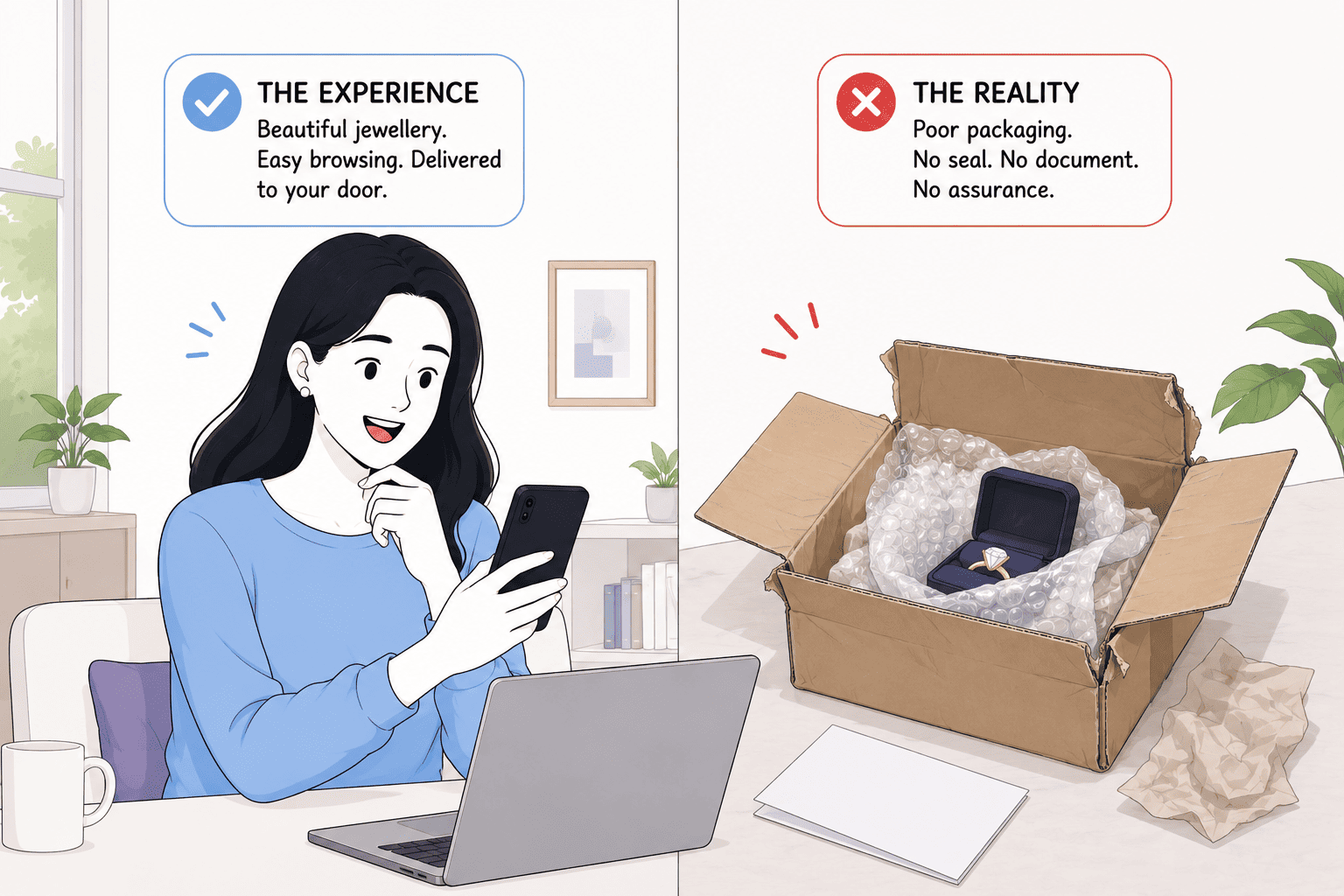
The return leg then travels back through the same logistics chain — with all the reverse delivery risks that standard couriers were never designed to handle. Customer-prepared packaging. Unverified handoff. No photo documentation. Insurance that was never written for this scenario.
And because home trial is designed to feel effortless for the customer, security is almost always the first thing that gets deprioritised in the experience design.
The Three Failure Points Nobody Talks About
The multi-piece risk. Five pieces go out. Three come back. What is the verification process for confirming the right three pieces returned, in the condition they left? In most operations: whatever the rider observed at pickup, if anything. No photos at departure. No photos at collection. No sealed packaging at either end. A ₹3 lakh selection moves back and forth on trust alone.
The dwell time risk. Home trial pieces sit at the customer's address for 24 to 48 hours. During that time, the brand has no visibility, no custody, and no insurance that specifically covers the trial period. The pieces are, operationally speaking, unaccounted for. If something happens during the trial window — loss, damage, substitution — the brand has almost no recourse.
The selection bias risk. A customer who has decided to return a piece has already made their decision. The incentive to package it carefully or flag any damage before handoff is low. The brand receives a returned piece with a scratch or a missing stone — and has no photo record from either end of the trial to determine when it happened.
All three failure points have the same root cause: the delivery and return chain was not built for this.

Why This Is Getting Worse
The D2C jewellery segment went from $5.7 million in funding in 2020 to over $100 million by 2024 — a rise of approximately 1,725% in four years. As more capital flows into customer experience features, home trial will scale from a differentiator to a baseline expectation.
More brands offering home trial means more high-value pieces in transit, more return legs to manage, and more disputes to resolve — on logistics infrastructure that has not changed to meet any of it.
The First Try-On May Soon Be Virtual
CaratLane and Tanishq already let customers try pieces virtually through their apps. Point your phone at your wrist and a bracelet appears on it. The rendering is good enough to give a real sense of proportion and scale. Meta's smart glasses are taking this further — within a few years, a customer browsing a catalogue could see exactly how a necklace sits against her collarbone before requesting a home trial.
The purchase sequence that is forming: Instagram discovery, AI recommendations based on browsing behaviour, virtual try-on to narrow the shortlist, physical home trial to close the decision.
That last step is not going away. Virtual try-on removes early uncertainty — it narrows a selection from twelve pieces to three. It does not replace the moment of holding a piece, feeling its weight, seeing it in natural light. AR makes the customer more decided before the trial begins. The trial itself becomes more valuable, not less.
For jewellery brands, home trial demand is likely to grow as AR adoption increases. A customer who has already virtually narrowed her selection to two pieces arrives with higher intent. Conversion rates go up. So does the pressure on the delivery and return chain to perform without errors.
A higher-intent customer who has shortlisted virtually and arrived expecting a physical trial is less tolerant of a poorly handled delivery. The bar rises.
What a Secured Home Trial Operation Looks Like
A secured home trial operation requires five things standard couriers cannot provide:
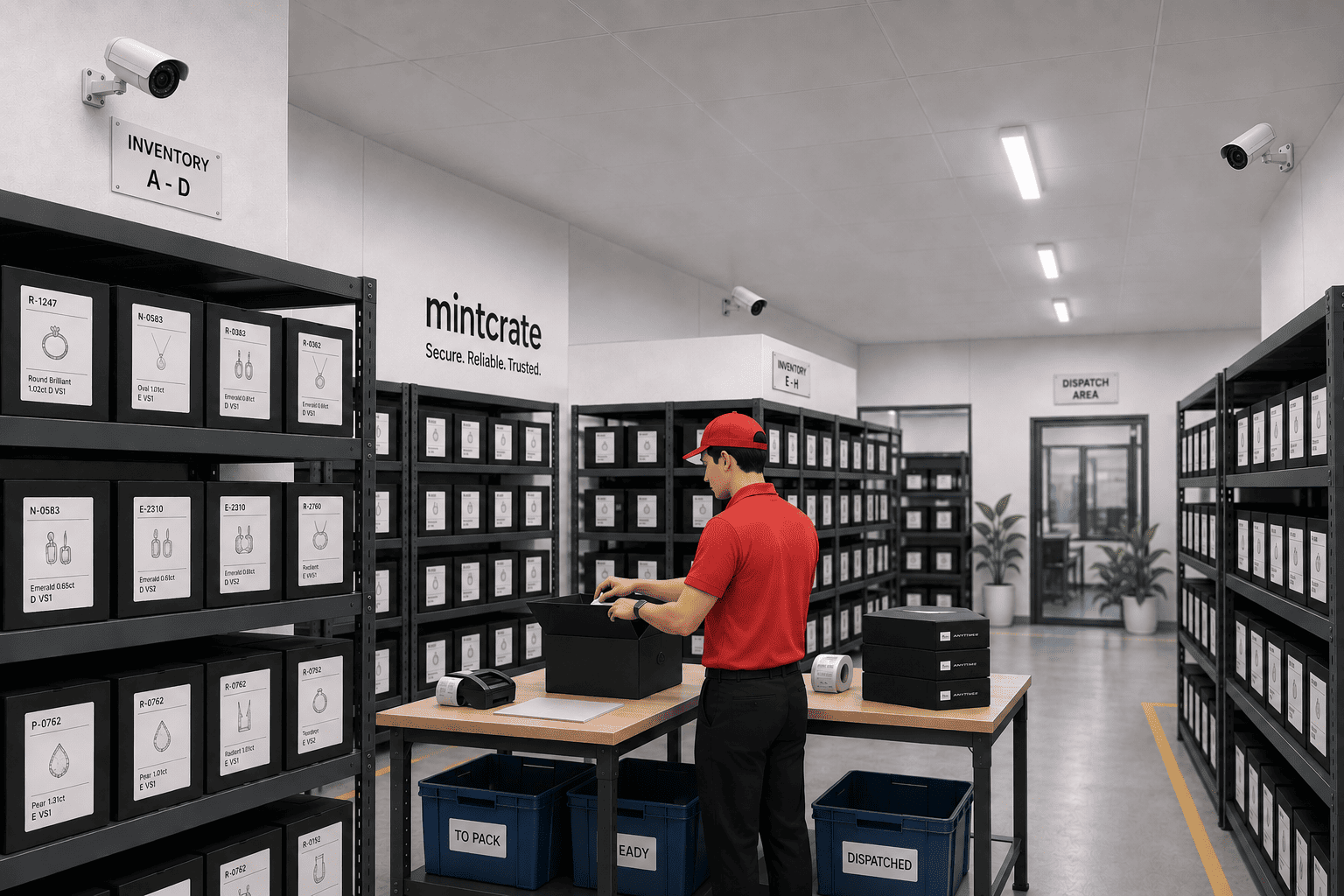
- Individual item documentation at dispatch — each piece photographed and recorded before leaving the facility. Condition at departure is verifiable.
- Tamper-proof packaging — the selection travels in sealed packaging that makes any access physically evident.
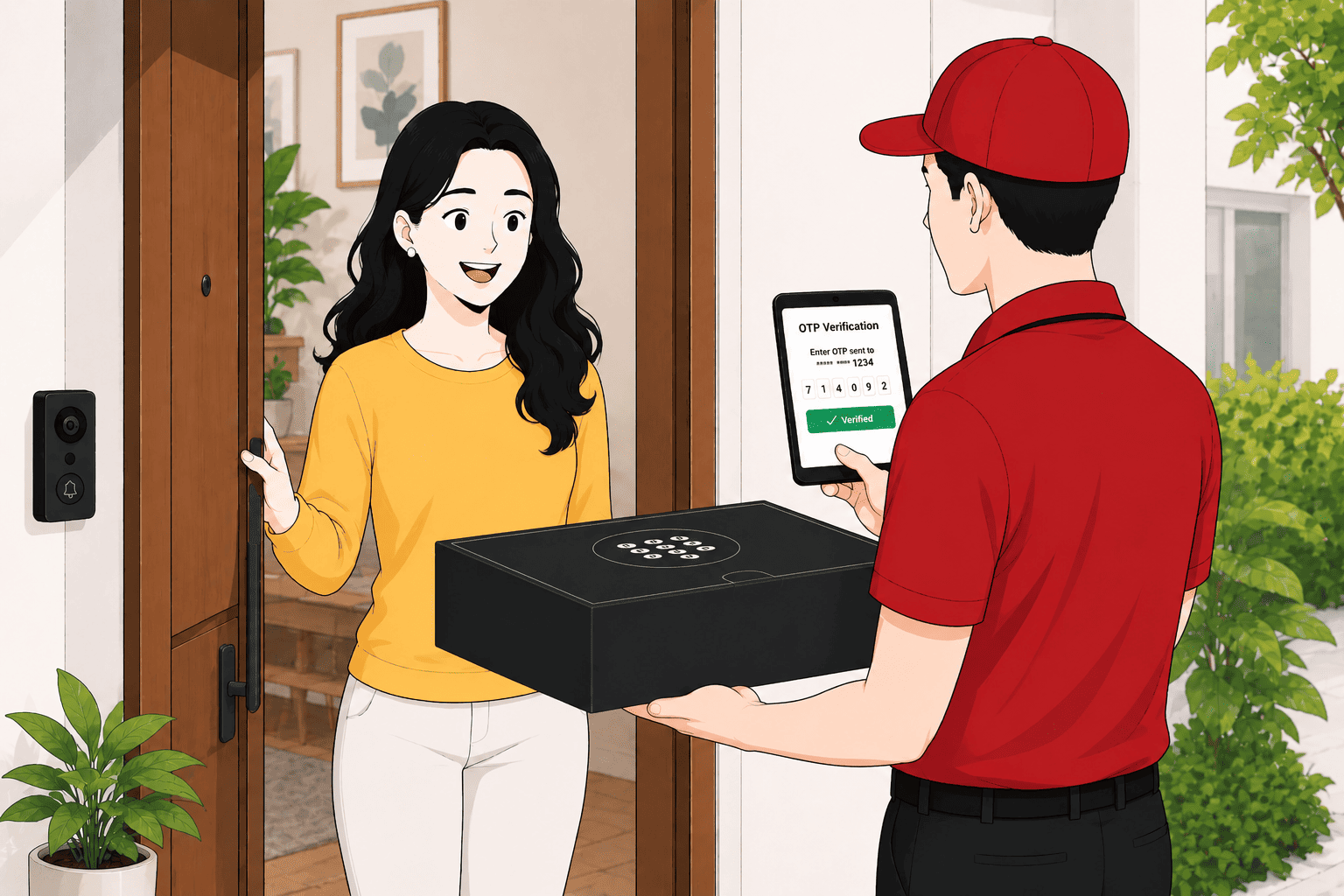
- Photo verification at delivery and collection — the customer signs off on what was received; the rider documents what was returned, before leaving the address.
- Insurance covering the trial period and the reverse leg — not just the forward journey. The dwell time and return transit need explicit cover.
- Police-verified personnel for both legs — the rider delivering and collecting a ₹2–3 lakh selection must meet a higher standard than gig-economy KYC.
Who Builds This First — and What They Unlock
D2C jewellery brands are the natural first movers. They are not carrying showroom infrastructure or legacy operations. They can build this, iterate on it, and lock in an operational advantage before traditional jewellers have started the conversation.
The next step is the dark jewellery store — a fulfilment-only warehouse with no showroom, no walk-in customers, and no high-street real estate overhead. A traditional jewellery showroom costs: prime location rent, elaborate interiors, display cases, trained floor staff, in-store security. Every rupee of that ends up in the price the customer pays.
A dark store removes most of those costs. Jewellers stop investing in real estate and start investing in what the customer actually buys. Lower prices. Better margins. The brands building secure home trial operations today are building exactly what that model needs.
The Bottom Line
Consumer behaviour has changed. Home delivery is no longer a novelty — it is the expected standard. What is not yet decided is which brands will deliver that experience safely, and which will learn through a dispute that convenience without security is a faster way to lose a customer than no convenience at all.
The tools to get this right exist today. The early movers will build an advantage that is hard to reverse.

The window to be early is still open. Not for long.
Sources
- India D2C Ecommerce Market Analysis — Mordor Intelligence, 2026
- Tracxn D2C Jewellery India Report — CXOToday, October 2024
- India Jewellery Market Forecast 2025–2033 — IMARC Group
- CaratLane Try-At-Home Service — Indian Retailer, September 2025
- Ecommerce Return Statistics 2026 — TrackVid / NRF / Eightx
Anurag Yadav
Co-Founder, mintcrate
Anurag is the co-founder of mintcrate, building Hyderabad's secure delivery service for jewellery, lab-grown diamonds, and high-value goods. He writes about last-mile logistics, D2C operations, reverse logistics, and the future of secure commerce in India. Connect on LinkedIn →